
Customer Experience Strategy & Service Transformation
A housing association recognised the need to strengthen its customer experience approach to support compliance with the Consumer Standards, respond to changing customer expectations and improve organisational consistency.
Whilst the organisation remained committed to delivering good services, leaders recognised that customer experience was being interpreted differently across teams and that customer insight, engagement, complaints, service delivery and organisational culture were not always connected through a single strategic framework.
Simcox CX was engaged to work alongside customers, colleagues and leadership teams to design and embed a customer experience strategy that would strengthen customer outcomes, improve accountability and create a more consistent customer-focused culture across the organisation.

The Challenge
The organisation faced a number of challenges common across the social housing sector:
Customer experience was understood differently across services and teams.
Customer feedback, complaints and satisfaction data were not always influencing service design or decision-making consistently.
There were pockets of embedded social housing stigma influencing attitudes, behaviours and assumptions about customers.
Customers wanted greater influence over how services were designed and delivered.
Colleagues wanted clearer expectations around what excellent customer experience looked like in practice.
Leadership teams required stronger visibility of customer themes, risks and service performance.
Consumer Standards expectations placed greater emphasis on tenant voice, accountability, fairness, transparency and customer outcomes.
Existing customer-focused initiatives lacked an overarching strategic framework.
The organisation wanted to move beyond customer experience being viewed as a specialist function and instead embed it as a shared organisational responsibility.
The Approach
Simcox CX designed and facilitated a collaborative customer experience strategy development programme involving customers, colleagues, managers and senior leaders.
The approach focused on ensuring the strategy was not developed for customers, but with customers.
Support included:
Customer and colleague engagement workshops to understand experiences, priorities and aspirations.
Review of customer feedback, complaints, tenant satisfaction measures and operational performance.
Exploration of organisational culture, behaviours and customer-facing practices.
Identification and challenge of social housing stigma and assumptions affecting customer interactions.
Co-design of customer experience principles and behavioural expectations.
Development of a Customer Experience Strategy aligned to the Consumer Standards.
Creation of customer experience commitments and organisational accountability measures.
Design of supporting communication and engagement materials.
Development and delivery of organisation-wide customer experience training.
Support for managers and leaders to embed customer experience expectations into everyday practice.
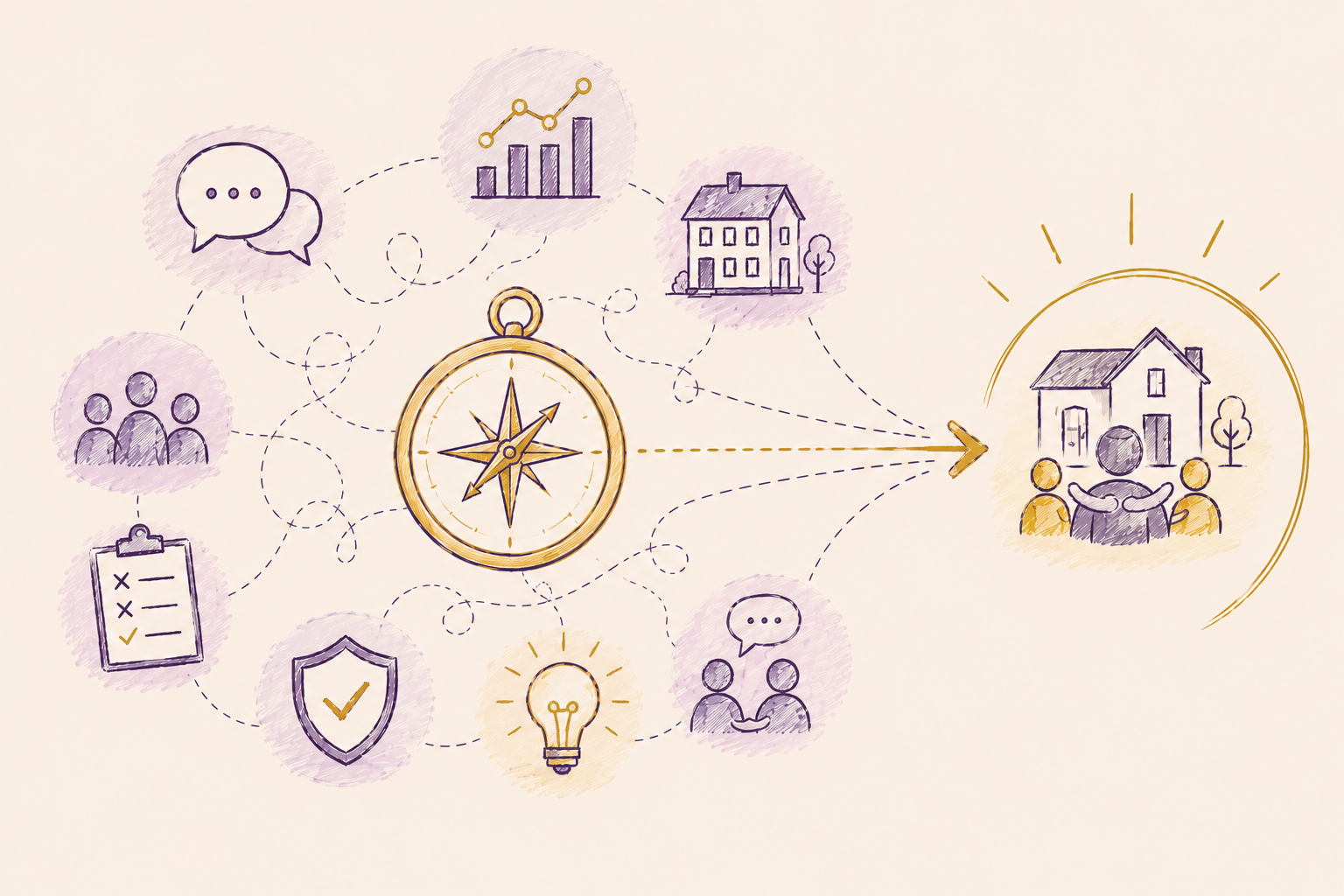
The strategy was built around the belief that customer experience is shaped through every interaction, decision and behaviour across an organisation rather than through a single team or service.

What Was Delivered
Key outcomes included:
Customer Experience Strategy
A co-designed Customer Experience Strategy informed by customers and colleagues.
Clear customer experience principles linked to organisational values.
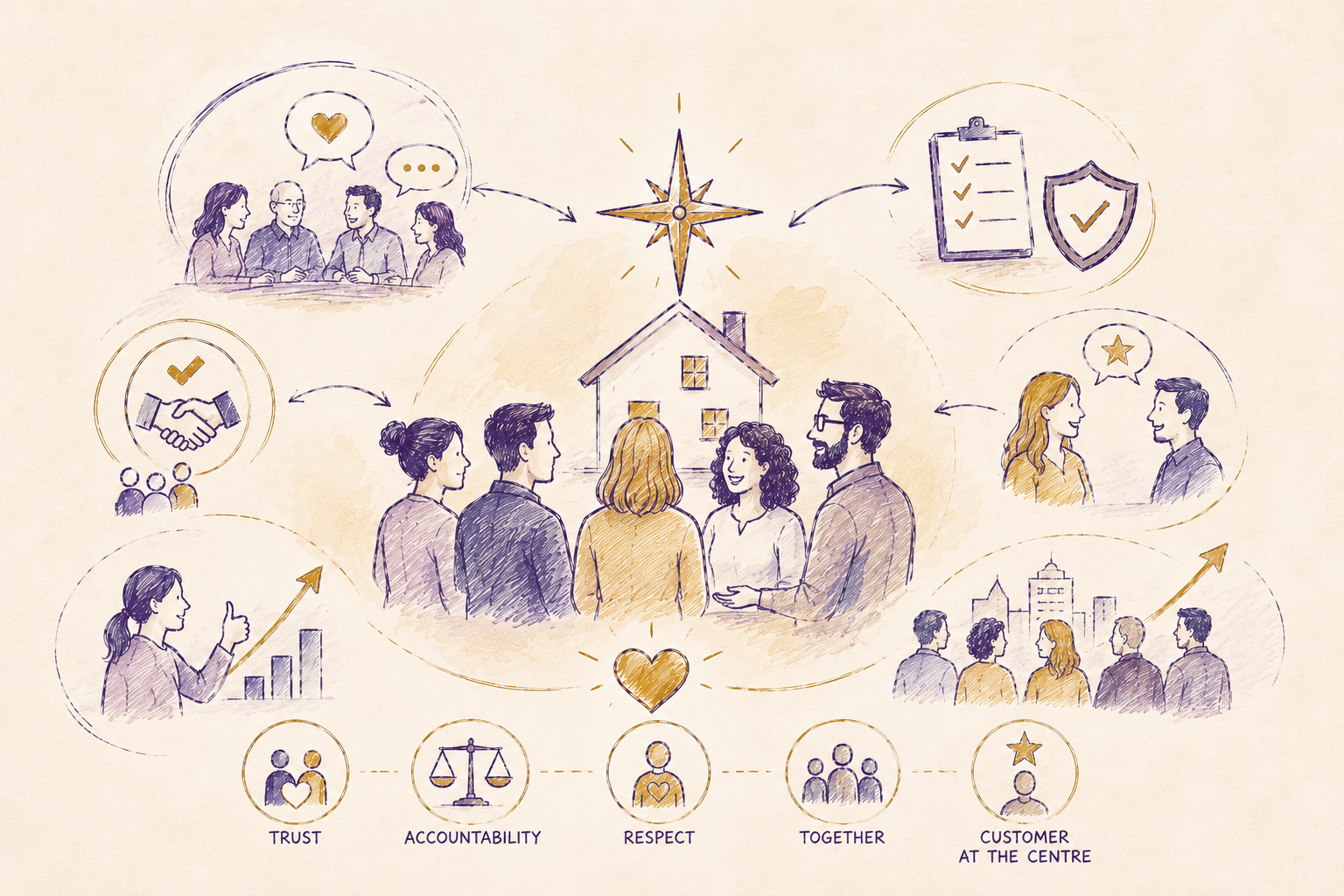
Customer commitments focused on trust, communication, accountability and respect.
Strategic alignment with Consumer Standards requirements.
Organisational Culture & Capability
Organisation-wide customer experience training programme.
Practical behavioural framework describing what good customer experience looks like in everyday delivery.
Increased awareness and challenge of social housing stigma.
Greater consistency in customer-focused behaviours across services.
Customer Voice & Accountability
Stronger integration of customer insight into organisational decision-making.
Enhanced visibility of customer feedback and experience.
Improved links between complaints, customer insight and service improvement.
Clearer customer accountability mechanisms.
Leadership & Service Improvement
Improved leadership visibility of customer themes and emerging risks.
Stronger alignment between customer experience objectives and operational delivery.
Greater organisational ownership of customer outcomes.
More structured approaches to monitoring customer experience performance.
The Outcome
The organisation established a clear and shared understanding of customer experience that extended beyond individual teams and became embedded within organisational culture.
Customers played a direct role in shaping the strategy and influencing the standards of service they could expect.
Colleagues developed greater confidence in delivering consistent customer-focused services and a stronger understanding of how their roles contributed to customer outcomes.
The organisation strengthened its readiness to meet Consumer Standards expectations while also creating a more customer-centred culture built on trust, accountability and respect.
Importantly, the work helped challenge elements of social housing stigma, reinforce customer dignity and place customer experience at the centre of organisational thinking, service delivery and decision-making.
Simcox CX Perspective
Customer experience strategies only create value when they move beyond documents and become embedded within organisational culture.
The most effective organisations create customer experience strategies with customers rather than for customers, connecting customer voice, organisational values, leadership behaviours and service delivery into a shared vision.
Meeting Consumer Standards expectations requires more than compliance. It requires organisations to actively listen, challenge assumptions, build trust and create cultures where customer experience is everyone's responsibility and at the heart of everything they do.
This project demonstrated how customer experience can become a practical driver of organisational culture, service improvement and customer trust rather than simply a performance measure or corporate objective.